
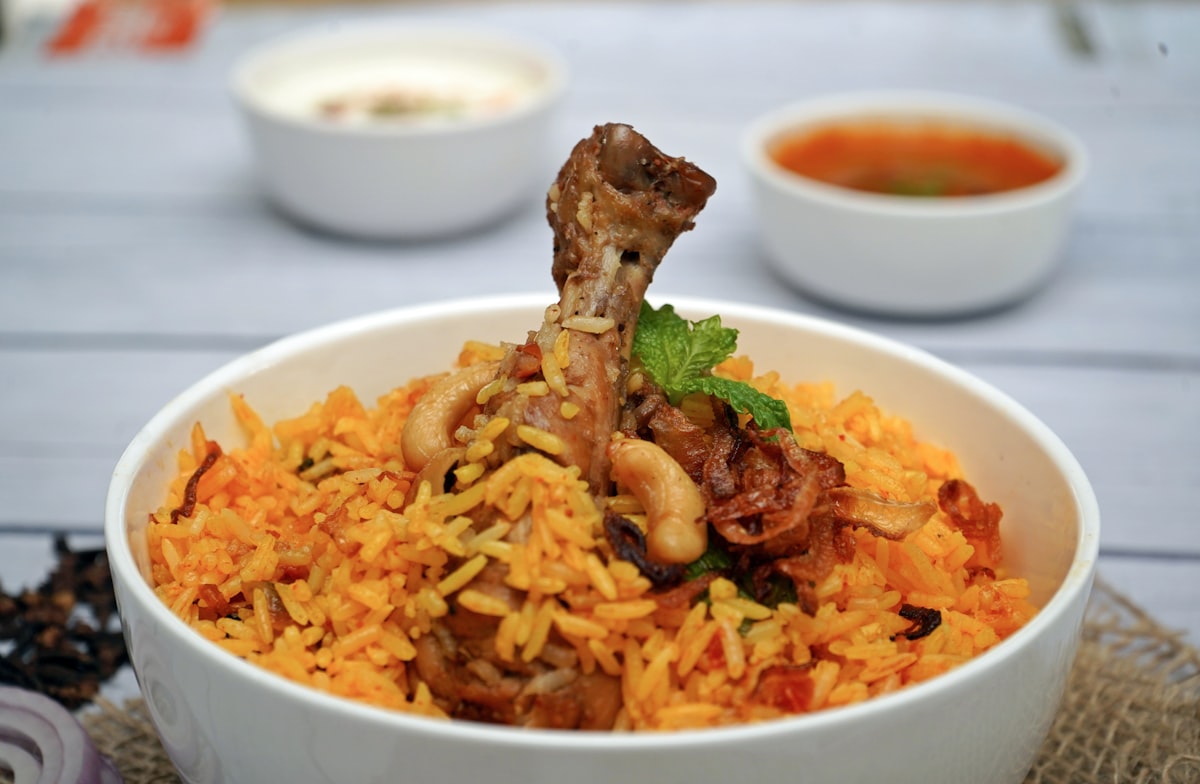
Why Friday Night Is Still Curry Night in Britain
Six O'Clock on a Friday: The Ritual Begins
It's barely gone six on a Friday evening and already the phones are ringing. In thousands of curry houses and takeaways across Britain — from the backstreets of Burnley to the high streets of Brighton — the weekly ritual is underway. Menus are debated, poppadoms are demanded, and the eternal question is posed once more: "Are we having rice or naan? Or both?" Friday night curry isn't just a meal in Britain. It's an institution, a weekly bookmark, a collective exhalation after five days of work. But how did it start, and why — despite all the changes in how we eat — does it endure?
The Origins: Pubs, Clubs, and Closing Time
The Friday curry tradition has its roots in the working men's clubs and pub culture of the 1960s and 1970s. Back then, pubs closed at 11pm sharp, and hungry drinkers needed somewhere to go. The curry house — often the only restaurant still open and serving at that hour — was the natural destination. It was affordable, welcoming, and warm on a cold night. No booking required, no dress code enforced, and the food was hearty enough to soak up an evening's worth of bitter.
In cities with large South Asian communities — Bradford, Birmingham, Leicester, parts of London — this post-pub migration became a weekly fixture. Groups of mates, couples on dates, families celebrating the end of the working week: they all converged on the local curry house on a Friday night. The habit spread outward, carried by word of mouth and the sheer reliability of the experience.
From Lads' Night Out to Family Tradition
By the 1980s, the Friday curry had evolved from a post-pub afterthought into a planned event. Families began booking tables for Friday evening, treating it as the week's main social occasion. The takeaway revolution added another dimension: those who didn't fancy going out could still participate in the ritual by phoning in an order and eating at home in their pyjamas.
This dual nature — equally suited to a night out or a night in — is part of why the Friday curry proved so resilient. It adapts to your mood, your budget, and your energy levels. Knackered after a brutal week? Order in. Feeling sociable? Book a table. Either way, the curry happens.
The Takeaway Factor
The growth of the curry takeaway in the 1980s and 1990s was transformative. Suddenly, every high street and suburban parade had at least one curry takeaway — often several — competing for the Friday night trade. The ritual developed its own choreography: one person collects the menus, everyone argues about what to order, someone phones it through, and then there's that glorious 30-40 minute wait filled with anticipation and the setting out of plates.
The arrival of the food itself became ceremonial. The rustling of carrier bags, the steam escaping from foil containers, the first hit of spiced aroma filling the kitchen — these sensory moments are woven into British domestic life in a way that no other cuisine has achieved. Fish and chips comes close, but it doesn't have the same sense of occasion, the same feeling of abundance.
Regional Variations
The Friday curry tradition isn't uniform across Britain. In Birmingham's Balti Triangle, it's all about the balti — served in a pressed-steel bowl, eaten with naan, no cutlery required. In Bradford, the preference is for Kashmiri-style dishes. Glasgow favours a particular style of creamy, mild curry that's distinctly Scottish-Punjabi. In London, the options are so vast that the tradition fragments into dozens of sub-traditions based on neighbourhood and community.
These regional variations are part of what makes the Friday curry so interesting. It's a national tradition expressed through local identity — the same impulse, filtered through different tastes and traditions.
How Delivery Apps Changed the Game
The arrival of Deliveroo, Uber Eats, and Just Eat in the 2010s represented the biggest shift in the Friday curry ritual since the invention of the telephone order. Suddenly, you didn't even need to collect your food — it appeared at your door, carried by someone on a bicycle. The convenience was intoxicating, and Friday night curry orders surged.
But the apps also brought competition. Where once you were loyal to your local — because it was the only option within walking distance — now you could order from any restaurant in a five-mile radius. Some local curry houses suffered as customers explored alternatives. Others thrived by embracing the platforms and reaching customers who'd never have found them otherwise.
Critically though, the apps haven't killed the Friday curry tradition. If anything, they've strengthened it by removing the last barriers to participation. Too tired to go out? Order on the app. Can't be bothered to phone? Order on the app. Don't know what you want? Browse photos on the app. The ritual survives because the technology serves it rather than replacing it.
The Social Glue
At its heart, the Friday curry endures because it's fundamentally social. Ordering a curry — whether you're in a restaurant, on the phone, or scrolling through an app — is a communal decision. Everyone has an opinion. Everyone wants their favourite dish. The negotiation process ("We had your tikka masala last week, we're having my jalfrezi this time") is itself a form of bonding, a weekly reaffirmation of household democracy.
The relationship between curry and British pop culture reinforces this communal aspect. From Goodness Gracious Me's "going for an English" sketch to Gavin and Stacey's takeaway scenes, the Friday curry has been lovingly depicted across British television and film as a moment of connection and comfort.
Will It Last?
Some commentators have predicted the end of the Friday curry — killed by healthy eating trends, or meal kits, or the rising cost of living. We think they're wrong. The tradition has survived every challenge thrown at it for over fifty years. It survived the microwave era, the sushi boom, the street food revolution, and a global pandemic. It survived because it meets a fundamental human need: the need to mark the end of the working week with something warm, flavourful, and shared with people you love.
Friday night is still curry night in Britain. Long may it continue.
Related Articles
Shorshe Ilish: The Bengali Art of Hilsa in Mustard Gravy
Shorshe ilish marries the oily, intensely flavoured hilsa fish with a sharp mustard gravy in a dish that sits at the very heart of Bengali identity. Here is how it is built, why the bones matter, and how to tame the bitterness of the mustard.

Shutki: Inside Bangladesh's Pungent World of Dried Fish
Shutki, Bangladesh's sun-dried fish, is one of the country's most polarising and beloved ingredients. This is the story of its coastal craft, its fiery bhortas and curries, and the deep regional pride it carries.

Mezban: The Communal Beef Feast of Chittagong
Mezban is Chittagong's grand tradition of feeding the community, centred on a fiery, ghee-rich beef curry served to thousands. Explore its history, its distinctive mezbani gosht, and how the custom travels to British gatherings.