
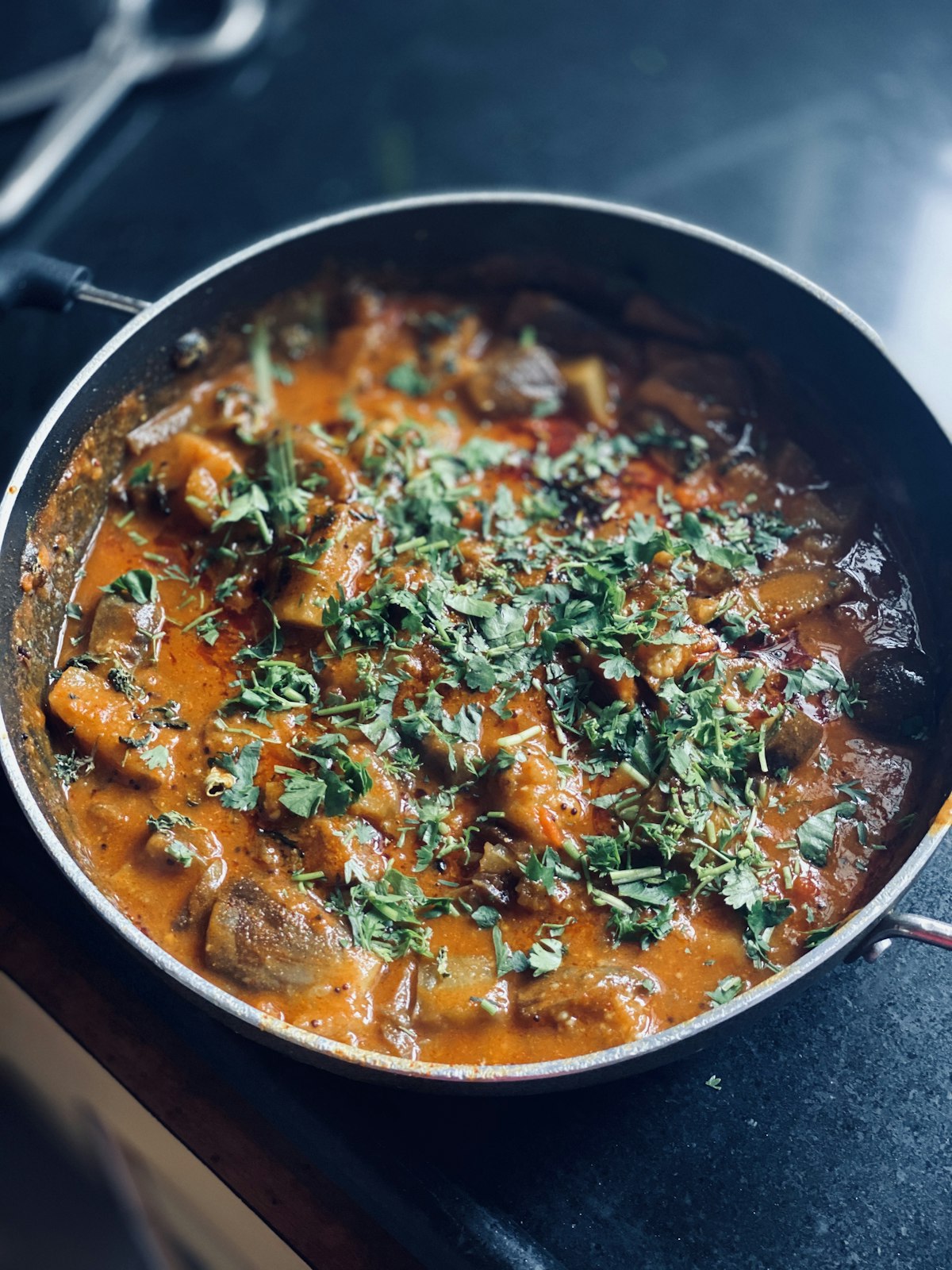
Dhaka's Old Town Street Food: Bakorkhani, Haleem and the Chowk Bazaar Iftar
Cross from modern Dhaka into the old town, the puran Dhaka that hugs the Buriganga river, and you step into a different rhythm entirely. The lanes narrow, the buildings lean closer, and the air thickens with frying oil, woodsmoke, cardamom and ghee. This is one of the great street-food quarters of South Asia, a place where Mughal-era recipes have been cooked in the same neighbourhoods for centuries. For anyone in Britain who loves Bangladeshi food, Old Dhaka is the source code, the place many of our favourite flavours trace back to.
Bakorkhani: The Biscuit With a Mughal Past
If one bread defines Old Dhaka, it is bakorkhani (also spelt bakarkhani). These are dense, layered, slightly hard discs of baked dough, somewhere between a biscuit and a flatbread, made by folding and rolling dough with fat so it bakes into flaky leaves. The classic version is plain and faintly savoury, eaten dunked in milky tea for breakfast; sweeter, sugar-dusted and sometimes nigella-flecked versions exist too.
The name carries a piece of subcontinental legend, usually linked to the Mughal courts and a tragic love story involving a nobleman named Aga Bakor and a courtesan, Khani Begum. Whatever the truth of the tale, the bread is genuinely old, traditionally baked on the walls of a tandoor-style clay oven. Walk through Old Dhaka in the early morning and you'll see bakers slapping the dough discs onto the oven, the whole operation unchanged for generations. It is the ultimate edible souvenir, sold in stacks tied with string.
Haleem: Slow Cooking as Street Theatre
Haleem is the dish that proves patience is a flavour. A thick, savoury porridge of lentils, wheat or barley and meat, it is pounded and stirred over low heat for hours until the grains and meat collapse into a smooth, almost velvety mass. Old Dhaka's haleem houses cook it in cauldrons, and during Ramadan the pace becomes frantic, with vendors ladling out portions topped with fried onions, fresh ginger juliennes, green chilli, coriander, a squeeze of lemon and a scatter of crisp fried garnishes.
The texture is the point: rich, restorative and deeply spiced with a warm masala of cinnamon, cardamom, cloves and pepper rather than fierce chilli heat. It is the kind of food that rebuilds you after a long fast, which is precisely why it dominates the iftar table. In Britain you'll find versions of haleem in Bangladeshi and wider South Asian restaurants, particularly during Ramadan, but the Old Dhaka original, eaten standing in a crowded lane, is something else.
Chowk Bazaar: The Greatest Iftar Market in Bangladesh
Nowhere captures Old Dhaka's food culture like Chowk Bazaar during Ramadan. For the rest of the year it is a busy, ancient marketplace; in the holy month it transforms, every afternoon, into perhaps the most famous iftar bazaar in the country. Vendors set up from early afternoon, and by the time the call to prayer approaches, the lanes are a wall of sound, colour and aroma as thousands come to buy food to break their fast.
The signature cry of the market is for one legendary item in particular, a giant mixed platter traditionally hawked as the great-grandfather of all foods, a sprawling assembly of meats, eggs, lentils, fried bits and spices sold by weight. Around it sit dozens of other iftar staples:
- Jilapi (jalebi), coiled and dripping with syrup, fried in enormous pans
- Beguni, aubergine slices in a spiced gram-flour batter
- Piyaju, lentil-and-onion fritters, and chickpea-flour pakora
- Halim by the bucket, ladled into bags for families
- Kebabs, shami and shik, grilled over coals
- Chhola (spiced chickpeas), muri (puffed rice) and date
- Sweet drinks: rooh afza, lassi and lemon sharbat to rehydrate
The scene is overwhelming in the best way. To break a fast with food bought from Chowk Bazaar is, for many Dhaka families, a Ramadan tradition as fixed as the prayers themselves.
Kebabs, Morog Polao and the Wider Spread
Old Dhaka's reputation rests on more than Ramadan. Its historic eateries, some over a century old, are famous for slow-cooked beef and mutton, for kacchi biryani at weddings, for nihari eaten at dawn, and for the buttery, gently sweet morog polao served to guests. The cooking here reflects the area's layered history: Mughal grandeur, Persian and Central Asian influence, and the trading communities who settled along the river all left their mark on the pot. It is richer, more meat-forward and more festive than the lighter fish-and-rice cooking of rural Bengal.
Why It Matters to British Curry Lovers
Most of Britain's Bangladeshi restaurant families have roots in Sylhet rather than Dhaka, so the old town's specific dishes don't always appear on UK menus. But Old Dhaka represents the celebratory, special-occasion end of Bangladeshi cooking, the haleem, the kebabs, the festive polao and the syrup-soaked sweets, that increasingly shows up at British Bangladeshi weddings, Eid gatherings and the more ambitious restaurants. Understanding it deepens any appreciation of the cuisine beyond the standard takeaway.
Eating It Here
You don't need a flight to taste the spirit of Old Dhaka. During Ramadan, British Bangladeshi neighbourhoods, from parts of east London to Birmingham and beyond, run their own iftar food culture, with shops and restaurants laying out piyaju, beguni, jilapi, haleem and dates each afternoon. Seek out a Bangladeshi sweet shop for fresh jilapi, look for bakorkhani in specialist bakeries, and order haleem when you see it on a Ramadan menu. It is a direct, delicious line back to the leaning lanes of the old town, and a reminder that some of the world's most characterful food is sold not in restaurants but on the street.
Related Articles
Shorshe Ilish: The Bengali Art of Hilsa in Mustard Gravy
Shorshe ilish marries the oily, intensely flavoured hilsa fish with a sharp mustard gravy in a dish that sits at the very heart of Bengali identity. Here is how it is built, why the bones matter, and how to tame the bitterness of the mustard.
Shutki: Inside Bangladesh's Pungent World of Dried Fish
Shutki, Bangladesh's sun-dried fish, is one of the country's most polarising and beloved ingredients. This is the story of its coastal craft, its fiery bhortas and curries, and the deep regional pride it carries.

Mezban: The Communal Beef Feast of Chittagong
Mezban is Chittagong's grand tradition of feeding the community, centred on a fiery, ghee-rich beef curry served to thousands. Explore its history, its distinctive mezbani gosht, and how the custom travels to British gatherings.