
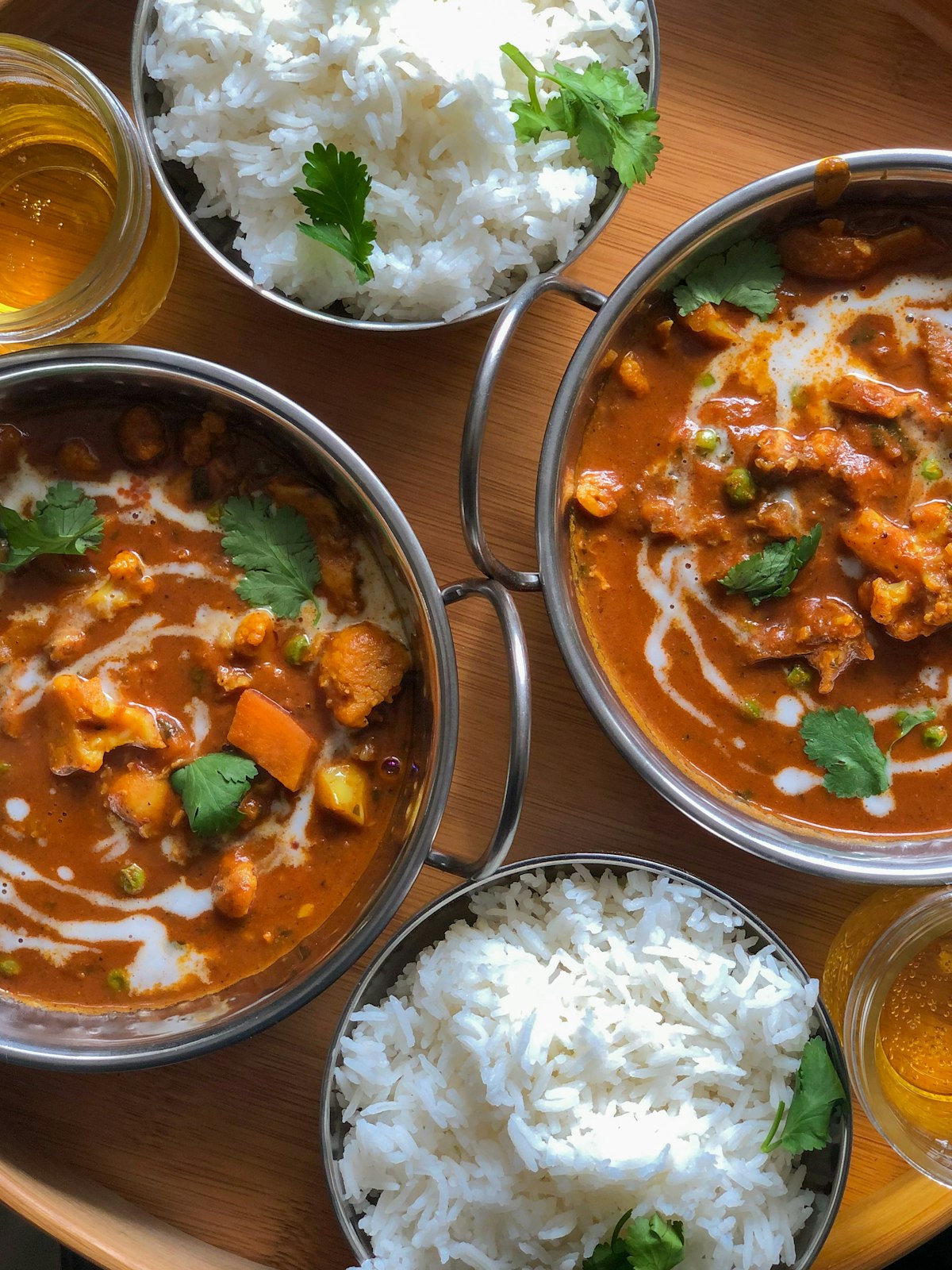
Goan Xacuti: Roasted Coconut, Poppy Seeds and the Konkan Coast
Say the word out loud first: it is pronounced sha-koo-tee, not as it looks on the page. That little surprise is fitting, because xacuti is a curry full of hidden depth. Where Goa's famous vindaloo announces itself with fierce, vinegary heat, xacuti works more quietly, building a dark, nutty, profoundly aromatic gravy from roasted coconut and a long roll-call of toasted spices. It is one of the Konkan coast's finest dishes, and one that rewards a cook willing to stand at the stove and let things turn deep brown.
A Curry Born on the Konkan Coast
Goa sits on India's western seaboard, part of the lush Konkan strip where the Arabian Sea meets the Western Ghats. It is a land of coconut palms, cashew groves, rice paddies and abundant seafood, and its food reflects that bounty. Coconut, in particular, is everywhere — fresh, dried, as milk, as oil — and in xacuti it takes centre stage. The dish is thought to have roots in the Hindu kitchens of the region, later shaped by the long Portuguese presence that began in the early sixteenth century. Like vindaloo and the Goan sausage chouriço, xacuti is a product of cultural meeting: Indian technique and ingredients meeting Portuguese tastes and trade.
The Art of Roasting Coconut
The single most important step in xacuti is the dry-roasting of grated coconut. Fresh or desiccated coconut is toasted slowly in a heavy pan, without oil, until it turns a deep golden brown — almost the colour of milk chocolate. This is a step you cannot rush and cannot skip. As the coconut darkens, its sugars caramelise and its oils develop, producing the smoky, nutty foundation that defines the curry. Stop too early and the masala tastes flat; let it catch and burn and the whole dish turns bitter. The reward for getting it right is a gravy with extraordinary richness and a colour that owes nothing to artificial dye.
A Dozen Spices and the Poppy Seed Secret
Alongside the coconut, xacuti calls for one of the most generous spice lists in Indian cookery. Each is dry-roasted before grinding, so the kitchen fills with successive waves of aroma. A typical blend draws on:
- Coriander seeds and cumin, the backbone of so many Indian masalas.
- Dried red chillies — often Kashmiri for colour and a milder heat.
- Black peppercorns, cloves, cinnamon and green cardamom.
- Star anise, mace and nutmeg for a warm, almost perfumed sweetness.
- Fennel seeds and a little turmeric.
- White poppy seeds (khus khus), the quiet hero, which thicken the gravy and lend a subtle, earthy creaminess without any dairy.
The roasted coconut, spices and poppy seeds are ground together — traditionally on a stone, today in a grinder — with a little water into a thick, dark paste. This masala is the engine of the dish, and a good cook will tweak the proportions to taste.
Building the Gravy
With the masala ready, the rest comes together more conventionally. Onions are browned deeply — another point where colour matters — along with ginger and garlic. Some cooks add tamarind for a sour edge, and many Goan versions include a splash of feni, the local cashew or coconut spirit, or a little vinegar nodding to the Portuguese palate. The ground masala is fried until the oil separates and the raw smell disappears, then loosened with water or thin coconut milk to make a sauce that is rich but pourable. The result should taste layered and rounded: nutty, warmly spiced, gently sour, with heat that builds rather than slaps.
Chicken or Lamb?
Xacuti is most famous as a chicken dish, and chicken on the bone is the classic choice — the bones add body to the gravy and the meat soaks up the masala beautifully over a moderate simmer. That said, lamb or mutton xacuti is superb and arguably even better suited to the curry's depth, the slower cooking giving the spices and coconut more time to penetrate. Crab and prawn versions appear along the coast too, where the sweetness of shellfish plays against the dark masala. As a rule of thumb: choose chicken for a quicker, lighter supper, lamb when you want something richer and have the afternoon to give it.
Xacuti in Britain
Goan food has slowly carved out a place on the British dining scene, helped by a wave of restaurants celebrating regional Indian cooking rather than the generic curry-house template. Xacuti still feels like a discovery when you find it on a menu, and it is worth seeking out — though, as with so many roasted-coconut curries, the quality depends entirely on whether the kitchen has taken the time to toast properly. If you cook it at home, serve it the Goan way: with plain steamed rice or the soft, slightly sour flatbread poee, and perhaps a simple salad of onion and lime to refresh the palate between mouthfuls.
Why It Is Worth the Effort
Xacuti is not a fifteen-minute weeknight curry, and it is not meant to be. The dish is essentially an exercise in patient toasting — coconut, spices, onions all coaxed to the edge of darkness without tipping over. Do that well and you produce something genuinely special, a curry that tastes of the Konkan coast and of the long, layered history of Goa itself. It is proof that the most memorable Indian food often comes not from a single hero ingredient but from the quiet alchemy of roasting and grinding done with care.
Related Articles
Shorshe Ilish: The Bengali Art of Hilsa in Mustard Gravy
Shorshe ilish marries the oily, intensely flavoured hilsa fish with a sharp mustard gravy in a dish that sits at the very heart of Bengali identity. Here is how it is built, why the bones matter, and how to tame the bitterness of the mustard.
Kosha Mangsho: How Bengalis Slow-Cook Mutton to Mahogany
Kosha mangsho is Bengal's deep, dark, celebratory mutton curry, coaxed to a mahogany sheen through slow reduction rather than added colour. This is the bhuna-style technique behind the wedding-and-festival classic, and how to serve it with luchi.
Chingri Malai Curry: Bengal's Prawn and Coconut Showpiece
Chingri malai curry pairs plump prawns with a silky, gently spiced coconut gravy in one of Bengal's grandest dishes. We trace its possible Malay roots, explain how to pick the right prawns, and share the technique that keeps the coconut milk from splitting.