
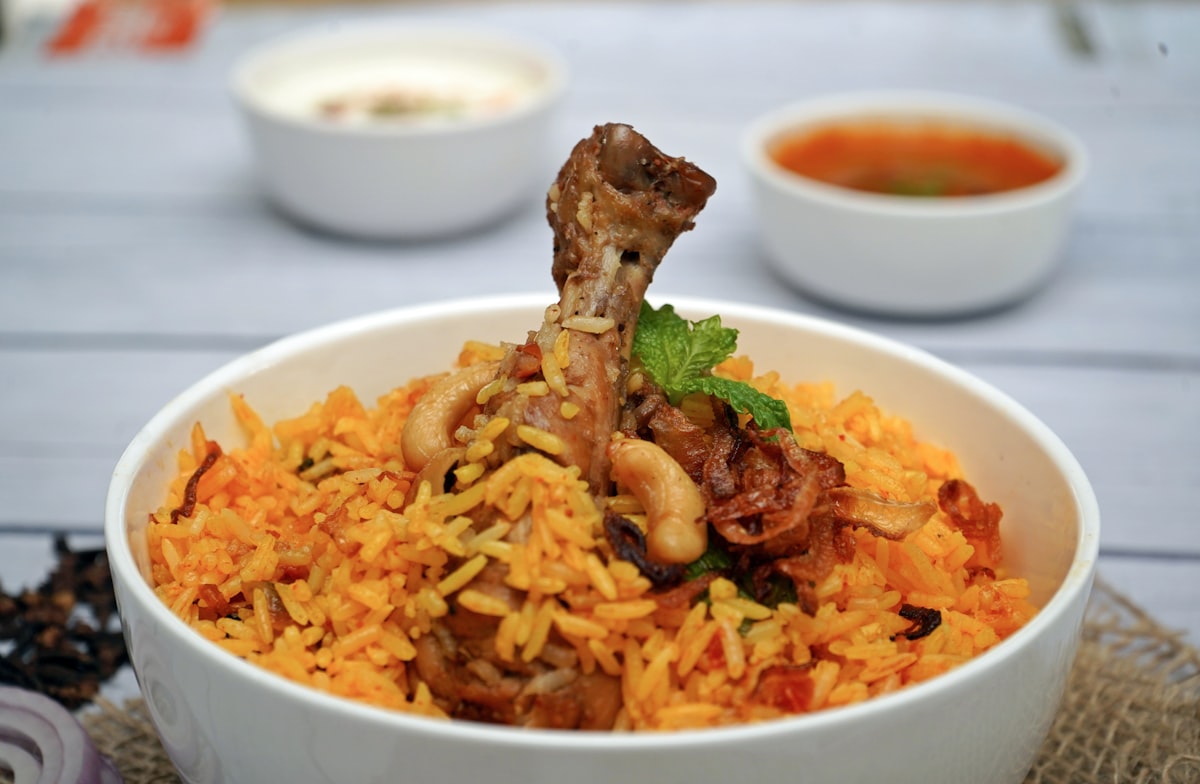
Hyderabadi Mirchi ka Salan and Bagara Baingan: The Nutty Gravies That Partner Biryani
Ask anyone about Hyderabadi food and the answer comes back in one word: biryani. Fair enough — the layered, saffron-streaked rice of the old Deccani capital deserves its fame. But a Hyderabadi biryani never arrives alone. Beside it sit two small bowls of dark, glossy, intensely savoury gravy, and to a Hyderabadi these are not optional extras. They are the dish. Mirchi ka salan and bagara baingan are the nutty, sour, deeply seasoned curries that complete the meal, and they reveal far more about the soul of Deccani cooking than the biryani ever quite manages to.
A Cuisine Born of Two Worlds
Hyderabad sits in the Deccan plateau, and its cooking is a genuine meeting of cultures. From the north came the Mughal and Persian inheritance of the Nizams' courts: rich gravies, slow-cooked meats, fragrant rice, the love of nuts and dried fruit. From the surrounding Telugu country came a southern sensibility — tamarind sourness, curry leaves, mustard seeds, sesame, peanuts and a far higher tolerance for chilli heat. Deccani cuisine is what happens when these two traditions sit at the same table for three centuries. Mirchi ka salan and bagara baingan are its clearest expression, because both lean hard on the southern pantry while keeping the courtly polish of the north.
Mirchi ka Salan: The Chilli That Isn't About Heat
The name translates roughly as 'chilli curry', which misleads English speakers into expecting a fiery dish. In fact the chillies used are large, mild banana-style green chillies, more vegetable than weapon, slit and gently fried so they soften and sweeten. The drama is all in the gravy around them.
That gravy is built on a roasted, ground paste of:
- Peanuts — for body and a rounded, earthy richness.
- Sesame seeds (til) — for nuttiness and a faint bitterness.
- Dry coconut — for sweetness and texture.
- Tamarind — the souring agent that lifts the whole thing.
The nuts and seeds are dry-roasted until fragrant, then ground to a coarse paste. A tempering of mustard seeds, cumin, curry leaves, fenugreek and nigella is bloomed in oil; ginger-garlic, turmeric and chilli powder go in, then the nut paste and tamarind water, and the whole lot is simmered low and slow until the oil rises to the surface and the gravy turns dark, thick and clinging. The fried chillies are folded back in at the end. The result is sour, nutty, savoury and only gently hot — a sauce designed precisely to be spooned over rich, meaty biryani.
Bagara Baingan: Small Aubergines, Big Flavour
Bagara baingan is a close cousin and shares much of the same masala backbone, but here the star is the aubergine. Small, round, purple baby aubergines are slit into quarters at the base while keeping them whole at the stem, so they hold their shape and soak up the gravy. They are lightly fried first to collapse the bitterness and set the flesh.
The gravy again draws on roasted peanuts, sesame, coconut and tamarind, with the same southern tempering of curry leaves and mustard seeds. The difference is in balance: bagara baingan tends to be a touch sweeter and rounder, the aubergines turning meltingly soft as they braise, their spongy flesh acting as a sponge for the nutty sauce. It is a vegetarian dish that eats with all the depth of a meat curry, which is exactly why it earns its place beside biryani.
Why These Gravies Matter to the Biryani
A good Hyderabadi biryani is relatively dry. The rice is fragrant and the meat tender, but the dish is not saucy, and that is by design. The salan and the baingan supply the moisture, the acidity and the lingering savour that the rice needs. Spoon a little tamarind-laced salan over a forkful of biryani and the whole plate comes alive; the sourness cuts the richness, the nuts add body, and the meal finds its balance. This is a cuisine that thinks in pairs, and to serve biryani without its gravies is, to a Hyderabadi, to serve half a dish.
Cooking Them in a British Kitchen
Both gravies are well within reach of a home cook here, and they keep and improve overnight, which makes them ideal for entertaining. A few pointers:
- Roast the nuts and seeds carefully — low and slow, stirring constantly, stopping the moment they smell toasty. Burnt sesame turns the whole gravy bitter.
- Use proper tamarind — block tamarind soaked and strained, or a good paste, rather than bottled sauce.
- Let the oil split out. When you see the oil separating and pooling at the edges, the gravy is properly cooked and the raw nuttiness has mellowed.
- Choose your chillies wisely for the salan: large, mild green ones, not bird's eye.
- Source baby aubergines from a South Asian grocer for the baingan; the small round ones hold up far better than sliced large aubergine.
Serve them, of course, with biryani, but they are also superb with plain basmati, a simple dal and a flatbread. Either way, you are tasting the Deccan itself — Mughal grandeur and Telugu fire reconciled in a single, glossy spoonful.
Related Articles
Shorshe Ilish: The Bengali Art of Hilsa in Mustard Gravy
Shorshe ilish marries the oily, intensely flavoured hilsa fish with a sharp mustard gravy in a dish that sits at the very heart of Bengali identity. Here is how it is built, why the bones matter, and how to tame the bitterness of the mustard.

Kosha Mangsho: How Bengalis Slow-Cook Mutton to Mahogany
Kosha mangsho is Bengal's deep, dark, celebratory mutton curry, coaxed to a mahogany sheen through slow reduction rather than added colour. This is the bhuna-style technique behind the wedding-and-festival classic, and how to serve it with luchi.

Chingri Malai Curry: Bengal's Prawn and Coconut Showpiece
Chingri malai curry pairs plump prawns with a silky, gently spiced coconut gravy in one of Bengal's grandest dishes. We trace its possible Malay roots, explain how to pick the right prawns, and share the technique that keeps the coconut milk from splitting.