
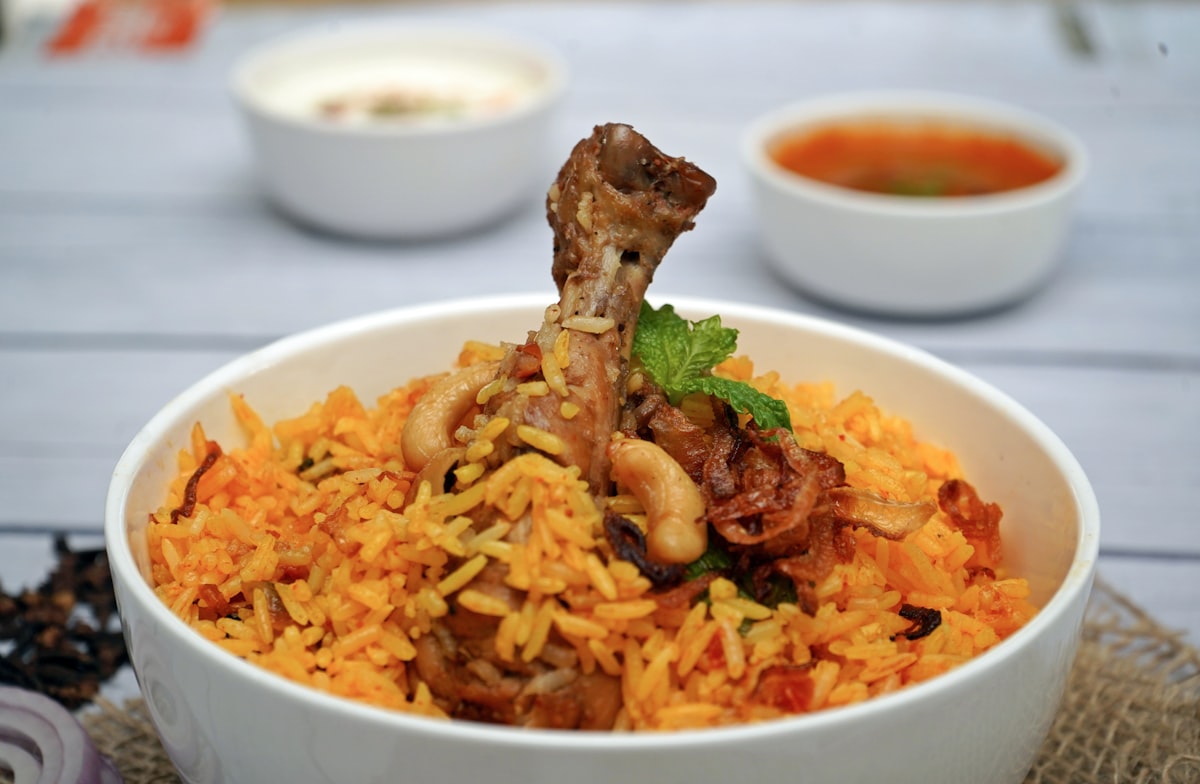
Kacchi Biryani: The Raw-Marinated Mutton Biryani of Dhaka
In Dhaka, there is biryani and then there is kacchi. To call kacchi biryani simply a rice dish is to miss the point entirely. It is the centrepiece of weddings, the measure by which a feast is judged, and a source of genuine civic pride for a city that takes its food very seriously. Ask any Dhakaiya where to find the best kacchi and you will start an argument that lasts the rest of the afternoon.
What Makes Kacchi Different
The word kacchi means raw, and that single word holds the secret of the dish. Unlike most biryanis where the meat is cooked first and then layered with par-boiled rice, in kacchi biryani the raw marinated mutton is placed at the bottom of the pot, the partially cooked rice is piled on top, and everything is sealed and cooked together from that raw start.
This is a high-wire act. The meat must cook through in the time it takes the rice to finish, both must emerge perfectly tender, and nothing can be opened or stirred mid-way. Get it right and the meat juices and rendered fat rise up through the rice, perfuming every grain. Get it wrong and you have undercooked mutton or a scorched base. That risk is precisely why a great kacchi commands such respect.
The Marinade Does the Heavy Lifting
Because the meat starts raw, the marinade has to tenderise and flavour it deeply. Traditionally this is mutton, meaning goat, on the bone, prized for the richness bone and fat bring. The mutton is marinated for hours, often overnight, in a mixture built for depth:
- Thick yoghurt, which tenderises and carries spice into the meat.
- Ginger and garlic paste, fried onions (beresta) and a little raw papaya paste, a classic natural tenderiser.
- A warm Mughlai spice profile of cardamom, cinnamon, cloves, mace, nutmeg and shahi jeera.
- Ghee or mustard oil, dried red chilli, and a measured amount of salt.
The result is meat that, once cooked under sealed heat, falls cleanly from the bone and tastes seasoned right through rather than just on the surface.
Potato, Aloo Bukhara and the Sweet Touch
Two additions distinguish Dhaka kacchi from its neighbours. The first is the potato. Large potatoes are often fried and tinted with a little colour, then tucked among the meat, where they soak up fat and spice and become a coveted part of every plate. For many people the potato is the best bit, and a kacchi without potato feels incomplete.
The second is aloo bukhara, dried sour plums, scattered through the pot. They release a gentle tang and sweetness that cuts through the richness of mutton and ghee. Alongside them, cooks often add a little kewra water or rose water, a few saffron threads or food colour for that signature patchwork of white and golden-orange grains, and sometimes a pinch of sugar. The overall flavour is rich and aromatic but balanced, never cloying.
The Dum: Sealing the Pot
The technique that ties it all together is dum, slow steaming under a sealed lid. Once the marinated meat, par-cooked rice, ghee, fried onions, plums and aromatics are layered, the lid is clamped on and the join is sealed, traditionally with a rope of dough pressed around the rim so no steam escapes.
The pot is then cooked over a low, steady heat, sometimes with hot coals placed on the lid to surround the rice with gentle warmth from above as well as below. Inside, trapped steam circulates, the meat braises in its own marinade, and the rice finishes cooking in fragrant vapour. Patience is everything. The cook listens, smells and waits, and only breaks the seal when the timing is right. Lifting the lid too early ruins the magic.
Biye Bari: The Wedding House Tradition
Kacchi is bound up with biye bari, the wedding house feast. At a traditional Bangladeshi wedding, kacchi biryani is very often the star of the menu, cooked in enormous degh pots by specialist cooks known as bawarchi who can judge a vast quantity by eye and feel alone. The arrival of the kacchi is an event in itself.
It is served generously, usually with accompaniments that refresh the palate between rich mouthfuls:
- Borhani, a spiced, slightly sour yoghurt drink seasoned with mint, mustard and green chilli, considered the perfect partner.
- A simple salad of onion, cucumber and lemon.
- Sometimes a sweet roast chicken or a firni custard to finish.
To grow up in Dhaka is to associate kacchi with celebration, with the noise and warmth of family gathered for a marriage, and with the feeling that something important is being marked.
Kacchi in Britain
For the British Bangladeshi community, kacchi biryani has become a treasured taste of home for weddings, Eid and large gatherings. While the everyday curry house menu rarely features true kacchi, because it demands time, skill and the right pot, a growing number of specialist caterers and restaurants in London and the Midlands now cook authentic Dhaka-style kacchi for community celebrations, complete with potato, plums and a glass of borhani on the side.
If you ever get the chance to eat a properly made kacchi, take it slowly. Find the potato. Notice how the sour plum lifts the meat. Appreciate that everything in front of you cooked together from raw in a single sealed pot, untouched and unstirred, in an act of confidence and craft that Dhaka has perfected over generations.
Related Articles
Shorshe Ilish: The Bengali Art of Hilsa in Mustard Gravy
Shorshe ilish marries the oily, intensely flavoured hilsa fish with a sharp mustard gravy in a dish that sits at the very heart of Bengali identity. Here is how it is built, why the bones matter, and how to tame the bitterness of the mustard.

Kosha Mangsho: How Bengalis Slow-Cook Mutton to Mahogany
Kosha mangsho is Bengal's deep, dark, celebratory mutton curry, coaxed to a mahogany sheen through slow reduction rather than added colour. This is the bhuna-style technique behind the wedding-and-festival classic, and how to serve it with luchi.

Chingri Malai Curry: Bengal's Prawn and Coconut Showpiece
Chingri malai curry pairs plump prawns with a silky, gently spiced coconut gravy in one of Bengal's grandest dishes. We trace its possible Malay roots, explain how to pick the right prawns, and share the technique that keeps the coconut milk from splitting.