
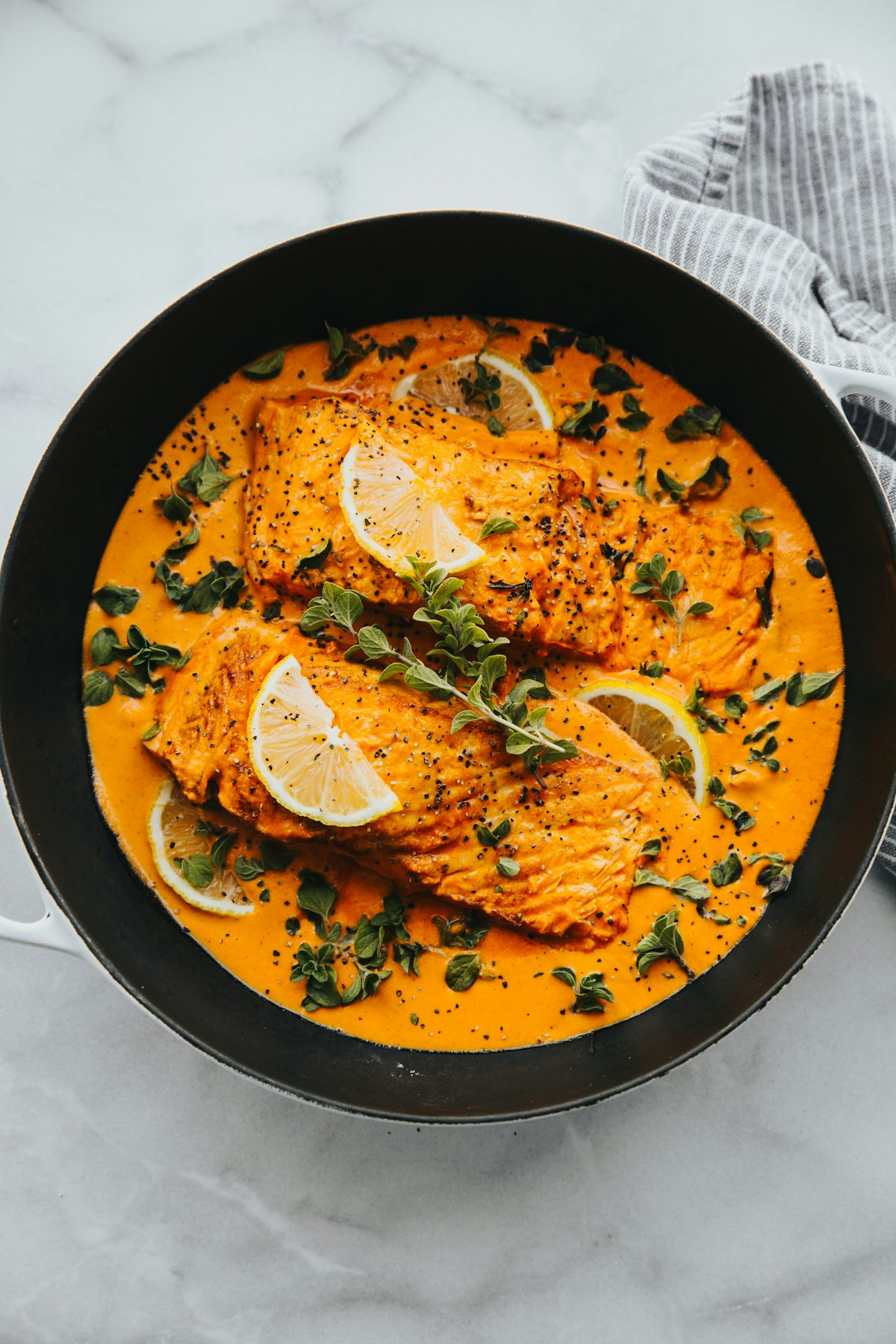
Kashmiri Rogan Josh's Cousins: Aab Gosht and Marchwangan Korma Explained
Rogan josh has become shorthand for Kashmiri food on British menus, all crimson gravy and warming aroma. Yet in Kashmir itself, rogan josh is only one course among many in the Wazwan, the great multi-dish banquet prepared by the waza, the hereditary master chefs of the valley. Beside it sit lamb dishes that almost never make it onto a UK menu but reveal far more about how Kashmiri cooks think. Two stand out as fascinating cousins to the famous rogan josh: the pale, milky aab gosht and the blazing marchwangan korma.
The Wazwan Context
To understand these dishes you have to understand the feast they belong to. The Wazwan is a ceremonial meal, traditionally many courses, dominated by mutton and goat and built around guests eating from a shared platter, the trami. The wazas who cook it are specialists, and several signature lamb preparations are non-negotiable: rogan josh, the meatball curries rista and gushtaba, tabak maaz fried ribs, and more. Within this repertoire, every dish is engineered to taste distinct despite sharing a small valley larder, which is exactly why studying them teaches you so much about technique.
The Kashmiri Spice Palette
Kashmiri cooking draws on a particular and somewhat surprising set of flavours. A few ingredients do an enormous amount of work:
- Kashmiri red chilli, prized for deep red colour and relatively mild heat, which is what gives rogan josh its glow without scorching the eater.
- Saffron (kong), grown in the valley around Pampore, used for colour and floral perfume.
- Fennel (saunf) and dry ginger (sonth), the backbone aromatics, often used as powders and far more prominent than in most other Indian regional cooking.
- Ratan jot (alkanet root), a natural colourant traditionally used to deepen the red of rogan josh.
- Whole spices like green and black cardamom, cloves and cinnamon, plus the asafoetida that many Kashmiri Pandit dishes rely on in place of onion and garlic.
A defining quirk is that much Kashmiri Pandit cooking avoids onion and garlic altogether, leaning on fennel, dry ginger and asafoetida instead, while Kashmiri Muslim cooking does use them. This single difference shapes the character of many Wazwan dishes.
Aab Gosht: The Milk-Based Braise
If rogan josh is the valley's bold red statement, aab gosht is its gentle whisper. The name itself points to its character; aab means water, and this is a lamb dish built on a delicate, pale broth enriched with milk. There is no chilli redness here at all. Instead, pieces of lamb, often on the bone, are simmered with whole spices, then finished in milk or a thin cream, scented with green cardamom and sometimes a little fennel.
The result is soothing and aromatic rather than fiery, the dairy carrying the spice perfume softly. Aab gosht is a masterclass in restraint, and it shows how the same lamb and the same valley spices can be steered toward comfort instead of heat. It also makes an instructive pairing on a table beside its fierier siblings, doing the same cooling job that white gravies do in many regional cuisines.
Marchwangan Korma: The Fiery One
At the opposite extreme sits marchwangan korma, whose very name carries the word for chilli (march). This is a korma in the braising sense, slow-cooked lamb in a rich gravy, but it dispenses with the gentle nut-and-cream profile that the word korma implies elsewhere. Instead it is built for serious heat, dark red and glossy, loaded with chilli that is reduced into a deep, oily, intensely flavoured sauce.
It is one of the spicier dishes of the Wazwan and a deliberate counterpoint to the milder courses, a reminder that Kashmiri food is not all delicate saffron and fennel. Where aab gosht uses dairy to soften, marchwangan korma uses chilli and slow reduction to concentrate, and the contrast between the two on one menu tells you almost everything about the range of the cuisine.
How the Spices Diverge Across the Three
Lined up together, rogan josh, aab gosht and marchwangan korma show how cleverage over a few ingredients produces wildly different dishes:
- Rogan josh balances Kashmiri chilli for colour with fennel, dry ginger and whole spice; moderate heat, deep red, aromatic.
- Aab gosht drops the chilli entirely and turns to milk, cardamom and gentle spicing; pale, soothing, fragrant.
- Marchwangan korma pushes the chilli hard and reduces it into an oily, fiery gravy; dark, intense, hot.
Bringing Them to a British Kitchen
For UK cooks and restaurateurs, these dishes are an open invitation to move beyond a single famous name. The ingredients are increasingly accessible: genuine Kashmiri chilli powder for colour, whole fennel and dry ginger powder, green and black cardamom, and saffron are all within reach of a good spice merchant. The technique rewards low, slow cooking and a willingness to let dairy do its work without rushing it to the boil.
If you want to taste the breadth of Kashmir, cook all three and serve them together. The diner who only knows rogan josh will discover that the valley speaks in many registers, from the milky calm of aab gosht to the roaring chilli of marchwangan korma, and that the famous red curry is just the opening line of a much longer story.
Related Articles
Shorshe Ilish: The Bengali Art of Hilsa in Mustard Gravy
Shorshe ilish marries the oily, intensely flavoured hilsa fish with a sharp mustard gravy in a dish that sits at the very heart of Bengali identity. Here is how it is built, why the bones matter, and how to tame the bitterness of the mustard.

Kosha Mangsho: How Bengalis Slow-Cook Mutton to Mahogany
Kosha mangsho is Bengal's deep, dark, celebratory mutton curry, coaxed to a mahogany sheen through slow reduction rather than added colour. This is the bhuna-style technique behind the wedding-and-festival classic, and how to serve it with luchi.

Chingri Malai Curry: Bengal's Prawn and Coconut Showpiece
Chingri malai curry pairs plump prawns with a silky, gently spiced coconut gravy in one of Bengal's grandest dishes. We trace its possible Malay roots, explain how to pick the right prawns, and share the technique that keeps the coconut milk from splitting.