
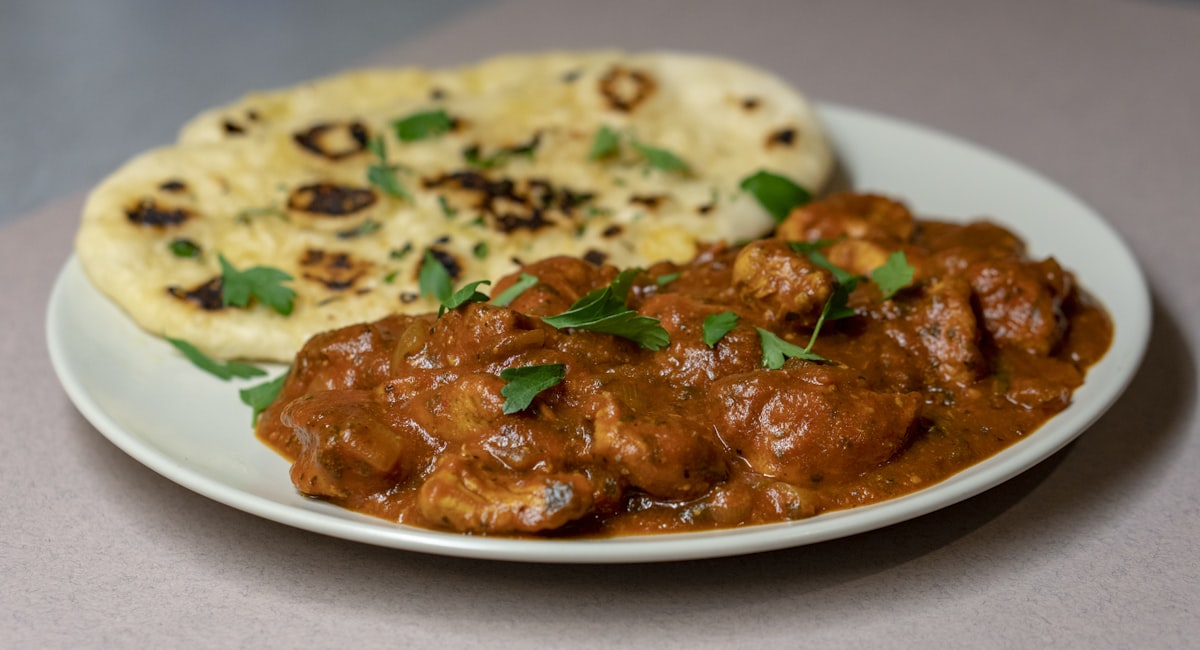
Maharashtrian Pandhra and Saoji: Vidarbha's Black, Fiery Mutton Tradition
Ask most British curry-lovers to picture Maharashtrian food and they will reach for the coast: coconut, kokum, sweet-sour fish curries from the Konkan, the gentle malvani gravies of the seaboard. But travel inland and east, to the dry, hot region of Vidarbha around Nagpur, and the cooking turns almost unrecognisable. Here the gravies run black and glossy with oil, the chilli hits like a slap, and a single bowl of mutton can make a grown adult reach for the buttermilk. This is the world of Saoji and Pandhra rassa, and it deserves to be far better known.
Who the Saoji Cooks Are
Saoji food is the cuisine of the Halba Koshti community, a clan of weavers who settled around Nagpur. As textile work waxed and waned, many families turned to feeding their neighbours, and over generations the community built a reputation for a very particular kind of mutton cookery: intensely spiced, generously oiled, and unapologetically fierce. What began as home and bhojnalaya (eating-house) food has become a regional badge of honour. In Nagpur today, "Saoji" on a signboard is a promise of heat and depth, not a marketing flourish.
The defining feature is the masala, and Saoji families guard their blends the way a Goan household guards its recheado. There is no single recipe, but the architecture is consistent and quite distinct from the garam masalas most curry houses keep.
The Secret of the Black Masala
What turns a Saoji gravy black and gives it that haunting, almost smoky depth is not burnt onion or excess chilli alone, but a roster of unusual aromatics roasted dark before grinding. The key players include:
- Khus khus (white poppy seeds) — dry-roasted and ground, they thicken the gravy and add a nutty, slightly bitter base note. Poppy seed is a signature of Vidarbha cooking generally.
- Dagad phool (stone flower, or black stone flower lichen) — this dried lichen, also central to Chettinad and Hyderabadi masalas, lends an earthy, woody, almost musky aroma that you cannot fake with anything else.
- Dry coconut (khobra) — roasted hard until it browns, contributing body and a faint sweetness that offsets the heat, quite unlike the fresh coconut of the coast.
- Whole spices roasted deep — cloves, black and green cardamom, cinnamon, bay, star anise, plus the warming triumvirate of cumin, coriander and a heavy hand of black peppercorn.
- Local chillies — a mix for colour and a mix for raw heat, often including the fierce dry red chillies of the region.
These are roasted dry, sometimes individually, then ground with onion and garlic into a dark paste. The result is a masala that tastes of woodsmoke, pepper and roasted nut long before the chilli arrives.
Saoji Rassa Versus Pandhra Rassa
The two famous Vidarbha mutton preparations sit at opposite ends of a spectrum and are often served together as a pair. Tambda rassa (the red, in Kolhapuri terms) and the Saoji-style dark gravy bring the fire; Pandhra rassa, meaning literally "white broth," brings the cooling counterpoint.
Pandhra rassa is a thin, pale, peppery soup made from the mutton stock, finished with ground coconut, cashew or poppy seed, ginger, garlic and white pepper, with almost no chilli colour at all. It is sipped between mouthfuls of the fiery curry to reset the palate, a clever, built-in cooling system. The contrast of the inky Saoji mutton against the milky Pandhra is one of the great visual and culinary pairings of Maharashtrian cooking.
Why It Is So Oily, and Why That Matters
The slick of oil floating on a Saoji gravy is not carelessness; it is technique. The masala is bhunoed (slow-fried) in plenty of oil until the spices release their fat-soluble aromatics and the rawness cooks out completely. That oil carries the flavour and signals that the masala has been properly cooked down. Skim it if you must, but in Nagpur the glistening surface is a mark of authenticity. Goat meat, cooked on the bone, simmers in this gravy until the connective tissue gives up its richness, and the bone marrow quietly enriches the whole pot.
How It Differs From Coastal Maharashtra
The gulf between Vidarbha and the Konkan is worth spelling out, because lumping all Maharashtrian food together does both a disservice:
- Fat and heat: Coastal malvani and Konkani cooking leans on fresh coconut, kokum and a balanced sweet-sour-spicy profile. Vidarbha goes dark, dry, peppery and far hotter.
- Coconut form: Fresh, milky coconut on the coast; roasted, browned dry coconut inland.
- Souring agents: Kokum and tamarind by the sea; Vidarbha relies less on sourness and more on roasted depth.
- Aromatics: Stone flower and heavy poppy seed are inland signatures rarely seen in coastal home cooking.
Finding and Cooking It in Britain
Saoji is still a rarity on UK menus, which is precisely why it is an opportunity for ambitious kitchens and home cooks chasing something beyond the familiar. The good news is that the building blocks are now reachable. Dagad phool and white poppy seeds turn up in well-stocked South Asian grocers and online spice merchants; dry copra coconut is everywhere; and the technique rewards patience rather than rare equipment.
If you want to try it at home, source mutton (goat) on the bone, roast your whole spices, poppy seed, dry coconut and stone flower separately until deeply coloured, then grind with browned onion, ginger and garlic. Fry that paste hard in generous oil, brown the meat, and let it braise low and slow until tender, loosening with hot stock. Serve with plain rice or a coarse jowar bhakri, and a bowl of pale Pandhra rassa alongside to put out the fire. It is a region's whole character in two bowls, and once tasted, the gentle coconut korma will never feel quite the same again.
Related Articles
Shorshe Ilish: The Bengali Art of Hilsa in Mustard Gravy
Shorshe ilish marries the oily, intensely flavoured hilsa fish with a sharp mustard gravy in a dish that sits at the very heart of Bengali identity. Here is how it is built, why the bones matter, and how to tame the bitterness of the mustard.

Kosha Mangsho: How Bengalis Slow-Cook Mutton to Mahogany
Kosha mangsho is Bengal's deep, dark, celebratory mutton curry, coaxed to a mahogany sheen through slow reduction rather than added colour. This is the bhuna-style technique behind the wedding-and-festival classic, and how to serve it with luchi.

Chingri Malai Curry: Bengal's Prawn and Coconut Showpiece
Chingri malai curry pairs plump prawns with a silky, gently spiced coconut gravy in one of Bengal's grandest dishes. We trace its possible Malay roots, explain how to pick the right prawns, and share the technique that keeps the coconut milk from splitting.