
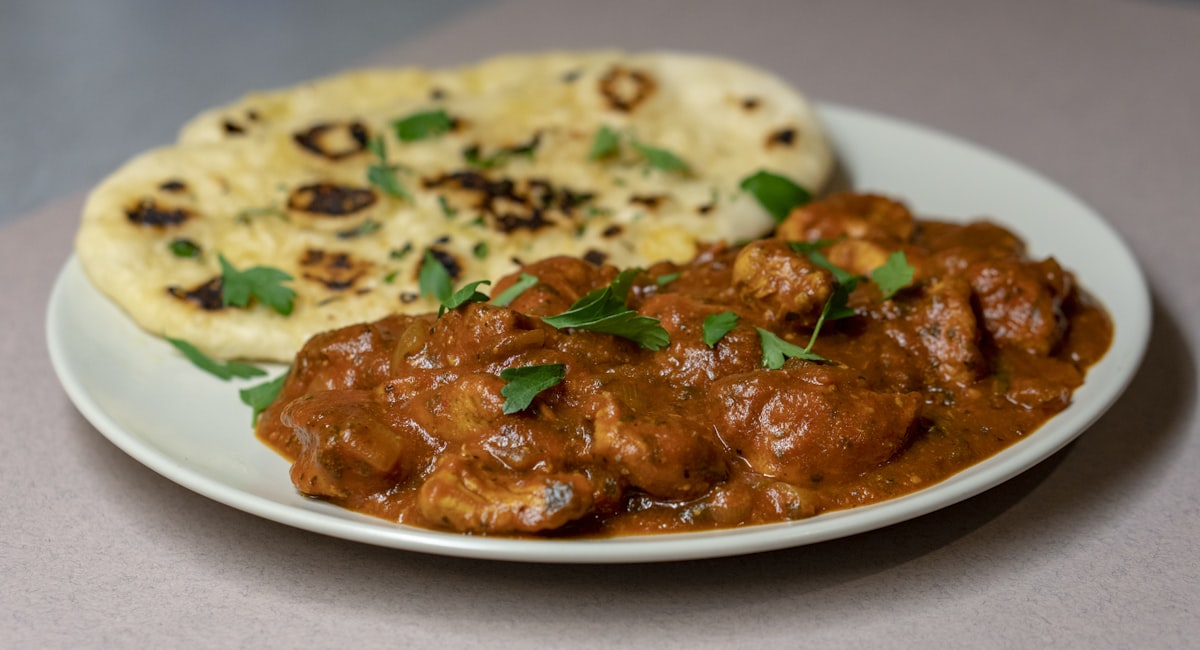
Making Authentic Peshawari Naan from Scratch
Britain's Favourite Bread With a Secret
Ask any regular curry house diner to name their favourite naan, and Peshawari will be near the top of the list. That sweet, rich, coconut-and-almond-stuffed bread — golden on the outside, soft and yielding within — has been a fixture of British Indian restaurant menus for decades. It's the one the children always want. It's the one that makes a simple dal dinner feel like a feast. And it's surprisingly easy to make at home.
Here's the secret most people don't know: Peshawari naan as served in British curry houses has only a loose connection to the bread traditions of Peshawar (the city in Pakistan's Khyber Pakhtunkhwa province). The sweet, coconut-heavy version we love is largely a British invention — an adaptation created by Bangladeshi and Pakistani restaurateurs to appeal to British palates. The original Peshawari breads are stuffed with dried fruits and nuts but aren't particularly sweet. Our version? Gloriously, unashamedly sweet. And we wouldn't have it any other way.
The Dough
Ingredients
- 350g plain flour (or use 300g plain and 50g self-raising for extra puffiness)
- 1 teaspoon salt
- 1 teaspoon sugar
- ½ teaspoon baking powder
- 100ml warm milk
- 75ml natural yoghurt (full-fat)
- 2 tablespoons vegetable oil
- 50ml warm water (approximately — you may need more or less)
Making the Dough
Combine the flour, salt, sugar, and baking powder in a large bowl. Make a well in the centre and add the warm milk, yoghurt, and oil. Mix with your hand, gradually incorporating the flour from the edges. Add warm water a little at a time until a soft, slightly sticky dough forms. You want it softer than bread dough but firm enough to handle.
Turn out onto a lightly floured surface and knead for eight to ten minutes. The dough should become smooth, elastic, and spring back when you poke it. The yoghurt in the recipe serves a dual purpose: it tenderises the gluten (making the finished naan softer) and adds a subtle tang that balances the sweet filling. Cover with a damp cloth and leave to rest for one to two hours. It won't rise dramatically like a yeasted dough, but it will relax and become much easier to roll.
The Filling
Ingredients
- 50g desiccated coconut
- 30g ground almonds
- 30g sultanas, roughly chopped
- 2 tablespoons caster sugar
- 1 tablespoon melted butter
- Seeds from 2 green cardamom pods, ground to powder
Mix everything together in a bowl. The filling should be moist enough to hold together when squeezed but not wet. If it's too dry, add another half tablespoon of melted butter. The cardamom is critical — it's the aromatic bridge between the sweet filling and the savoury bread, and without it the naan tastes flat.
Shaping
Divide the rested dough into six equal balls. Roll each ball into a circle about 12cm across. Place a generous tablespoon of filling in the centre. Gather the edges of the dough up around the filling, pinching them together to seal completely. Flatten the filled ball gently with your palm, then carefully roll it out into a teardrop shape about 20cm long and 12cm wide. Roll gently — if you're too aggressive, the filling will burst through. A few visible lumps of coconut and sultana pressing against the surface are fine; they'll caramelise beautifully during cooking.
Cooking Without a Tandoor
A tandoor reaches temperatures of 450–500°C. Your home oven doesn't come close. But a cast iron frying pan on a high flame gets surprisingly hot, and it's the best home method we've found for naan.
Heat a large cast iron pan (or the heaviest frying pan you own) over the highest heat your hob allows. Give it a full five minutes to get screaming hot. Lightly wet one side of the naan with water (this creates steam and helps it puff), then place it wet-side down in the dry pan. Cook for two minutes — you'll see bubbles forming on the surface and the edges starting to set. Flip and cook for another ninety seconds.
Now the optional but recommended step: using tongs, hold the naan directly over the gas flame (or under a preheated oven grill) for fifteen to twenty seconds, moving it constantly so it chars in spots without burning. This gives you those gorgeous black blisters that restaurant naan has. Brush immediately with melted butter and serve hot.
If You Don't Have a Gas Hob
Electric and induction hob users, don't despair. The cast iron method still works — you just won't get the direct-flame charring. To compensate, crank your oven grill to maximum and finish the naan under it for thirty to forty seconds after the pan stage. Keep a close eye on it; the line between charred and carbonised is about five seconds.
Variations
- Keema naan: Replace the sweet filling with spiced lamb mince (cooked and cooled). A savoury alternative that's equally popular in curry houses.
- Garlic naan: Skip the filling entirely. Before cooking, press minced garlic and chopped coriander into the surface of the rolled-out dough. Brush heavily with garlic butter after cooking.
- Cheese naan: Fill with grated mature Cheddar mixed with chopped green chilli. Not remotely traditional, entirely delicious.
For more bread techniques, explore our guide to plain naan without a tandoor. And for the full tandoori cooking experience — breads, meats, and everything in between — our comprehensive guide to tandoori cooking at home covers every technique you need.
Homemade Peshawari naan, fresh from the pan, brushed with butter and still puffing steam — there's nothing in a plastic packet or a restaurant bread basket that comes close. It takes practice, but by your third or fourth batch you'll have the technique down, and you'll never look at a takeaway naan the same way again.
Related Articles
Shorshe Ilish: The Bengali Art of Hilsa in Mustard Gravy
Shorshe ilish marries the oily, intensely flavoured hilsa fish with a sharp mustard gravy in a dish that sits at the very heart of Bengali identity. Here is how it is built, why the bones matter, and how to tame the bitterness of the mustard.
Kosha Mangsho: How Bengalis Slow-Cook Mutton to Mahogany
Kosha mangsho is Bengal's deep, dark, celebratory mutton curry, coaxed to a mahogany sheen through slow reduction rather than added colour. This is the bhuna-style technique behind the wedding-and-festival classic, and how to serve it with luchi.

Chingri Malai Curry: Bengal's Prawn and Coconut Showpiece
Chingri malai curry pairs plump prawns with a silky, gently spiced coconut gravy in one of Bengal's grandest dishes. We trace its possible Malay roots, explain how to pick the right prawns, and share the technique that keeps the coconut milk from splitting.