
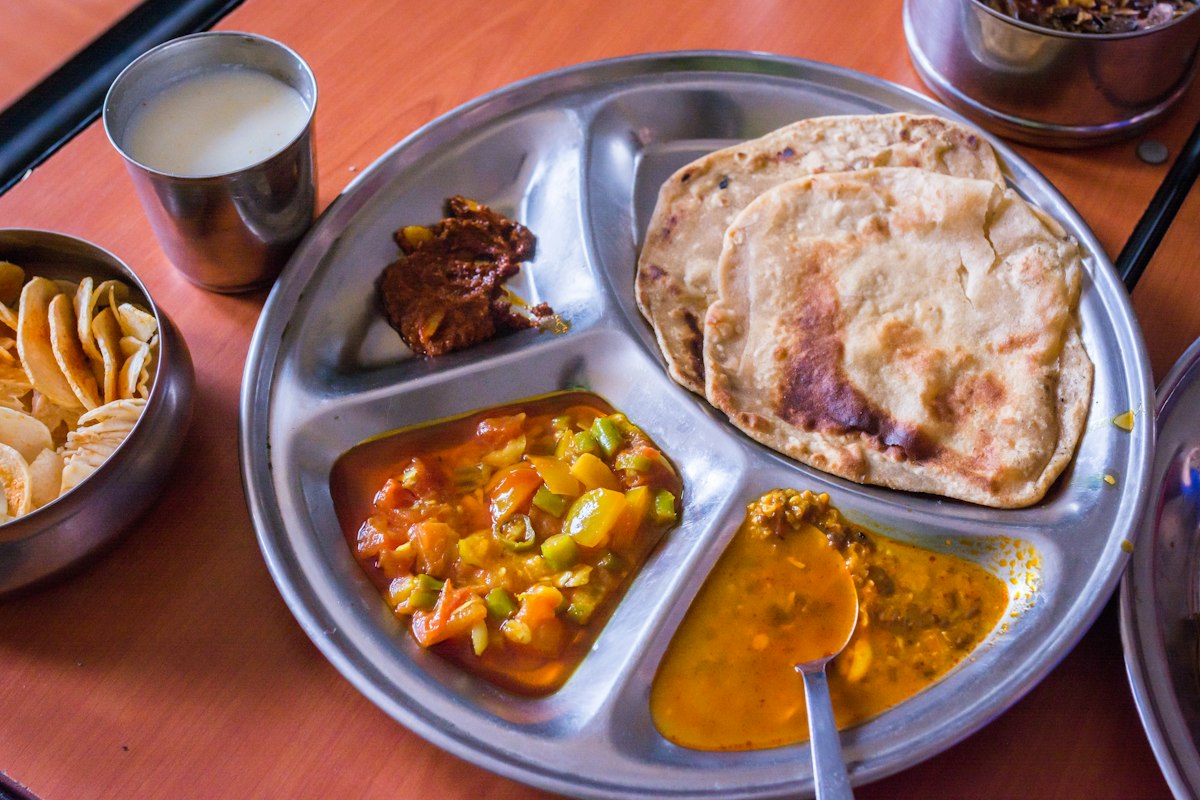
Undhiyu: Gujarat's Buried Winter Vegetable Casserole
There is a dish in Gujarat so tied to a single season that its arrival on the table is practically a calendar event. When the winter markets of Surat fill with flat green papdi beans, purple yams and small tender aubergines, families know it is time for undhiyu, the slow-cooked vegetable feast whose very name comes from the upside-down clay pots in which it was traditionally cooked.
What the Name Tells You
The word undhiyu derives from the Gujarati undhu, meaning inverted or upside-down. In the old method, a sealed earthen pot called a matlu was packed with vegetables and dumplings, turned mouth-down, and buried in a pit. A fire was lit above and around it, and the whole thing cooked slowly from the heat radiating through the earth and the clay. This is, in effect, an ancient form of pit oven, and it is closely associated with the Surti style from the city of Surat.
That buried, sealed cooking did two things. It steamed the vegetables gently in their own moisture and the oil, and it imparted a faint smoky, earthy note from the clay and the surrounding fire. Few home cooks bury pots today, but the slow, sealed, low-disturbance method survives in the way undhiyu is layered and cooked in a heavy pot on the stove or over coals.
A Roll-Call of Winter Vegetables
Undhiyu is, at heart, a celebration of seasonal produce, and the classic Surti version is generous with it. The usual cast includes:
- Surti papdi (flat broad-bean-like pods) and their tender inner beans, papdi na lilva
- Purple yam (kand) and sweet potato, cut into chunks
- Small aubergines, often slit and stuffed with spice paste
- Baby potatoes and raw banana
- Green garlic in season, which gives the dish its distinctive fragrance
The vegetables are not all treated identically. Some are stuffed with a green masala paste, others simply layered, so that the finished dish offers a range of textures from soft yam to firm bean.
Muthia: The Dumplings That Make It a Feast
What lifts undhiyu from a vegetable stew to a true celebration dish is muthia, small dumplings of fenugreek leaves bound with gram flour and wheat flour, seasoned with carom seeds, turmeric, chilli and a little sugar. The name comes from muthi, a fist, because the dough is gripped and shaped by hand. The muthia are usually fried until golden, then folded into the vegetables towards the end of cooking so they soak up the spiced oil while keeping a little bite.
The slight bitterness of fenugreek in the muthia is essential. It cuts through the richness of the oil and the sweetness of the yam and balances the whole dish, that hallmark Gujarati equilibrium of sweet, savoury and faintly bitter all in one spoonful.
The Green Masala and the Oil
The flavour of undhiyu rests on a fresh green masala rather than a dried, browned spice base. Coriander leaves, green chillies, ginger, garlic and grated fresh coconut are pounded or blitzed together, sharpened with a little lime or tamarind and rounded with a pinch of sugar. This bright paste is rubbed into the slit vegetables and stirred through the pot, which is why a good undhiyu tastes herbaceous and fresh despite its long cooking.
It is also, frankly, a rich dish. Generous oil is part of its identity; it carries the spice, helps the slow cooking, and gives the finished undhiyu its glossy sheen. This is festival food, not everyday diet food, and it is meant to be indulgent.
When and How It Is Eaten
Undhiyu peaks around Uttarayan (Makar Sankranti) in mid-January, the kite-flying festival when Gujarat takes to its rooftops. Pots of undhiyu are prepared in bulk and shared, often eaten with hot puris and washed down with jalebi for a sweet contrast. The pairing of savoury, spiced undhiyu with crisp, syrup-soaked jalebi is a much-loved Surti tradition that perfectly captures the cuisine's love of opposites meeting on one plate.
Because it keeps and even improves over a day, undhiyu is ideal feast food, made ahead, shared widely and enjoyed slowly.
Undhiyu in Britain
For the UK's large Gujarati communities, undhiyu is a powerful taste of home, and around Uttarayan you will find it in Gujarati sweet shops and restaurants across Leicester, Wembley and beyond. Sourcing surti papdi and fresh green garlic in a British winter can be a challenge, so cooks adapt, leaning on what the Asian grocers have in and sometimes using frozen lilva beans to keep the dish authentic. A handful of vegetarian Gujarati kitchens make it a seasonal special, and it is worth seeking out.
If you ever get the chance to taste a properly made undhiyu, take a moment before you dig in. That humble-looking casserole carries an entire season, a clever ancient cooking method, and the patient, generous spirit of Gujarati festival cooking, all in one fragrant pot.
Related Articles
Shorshe Ilish: The Bengali Art of Hilsa in Mustard Gravy
Shorshe ilish marries the oily, intensely flavoured hilsa fish with a sharp mustard gravy in a dish that sits at the very heart of Bengali identity. Here is how it is built, why the bones matter, and how to tame the bitterness of the mustard.

Kosha Mangsho: How Bengalis Slow-Cook Mutton to Mahogany
Kosha mangsho is Bengal's deep, dark, celebratory mutton curry, coaxed to a mahogany sheen through slow reduction rather than added colour. This is the bhuna-style technique behind the wedding-and-festival classic, and how to serve it with luchi.

Chingri Malai Curry: Bengal's Prawn and Coconut Showpiece
Chingri malai curry pairs plump prawns with a silky, gently spiced coconut gravy in one of Bengal's grandest dishes. We trace its possible Malay roots, explain how to pick the right prawns, and share the technique that keeps the coconut milk from splitting.