
Recipes
Articles about recipes in the UK curry industry
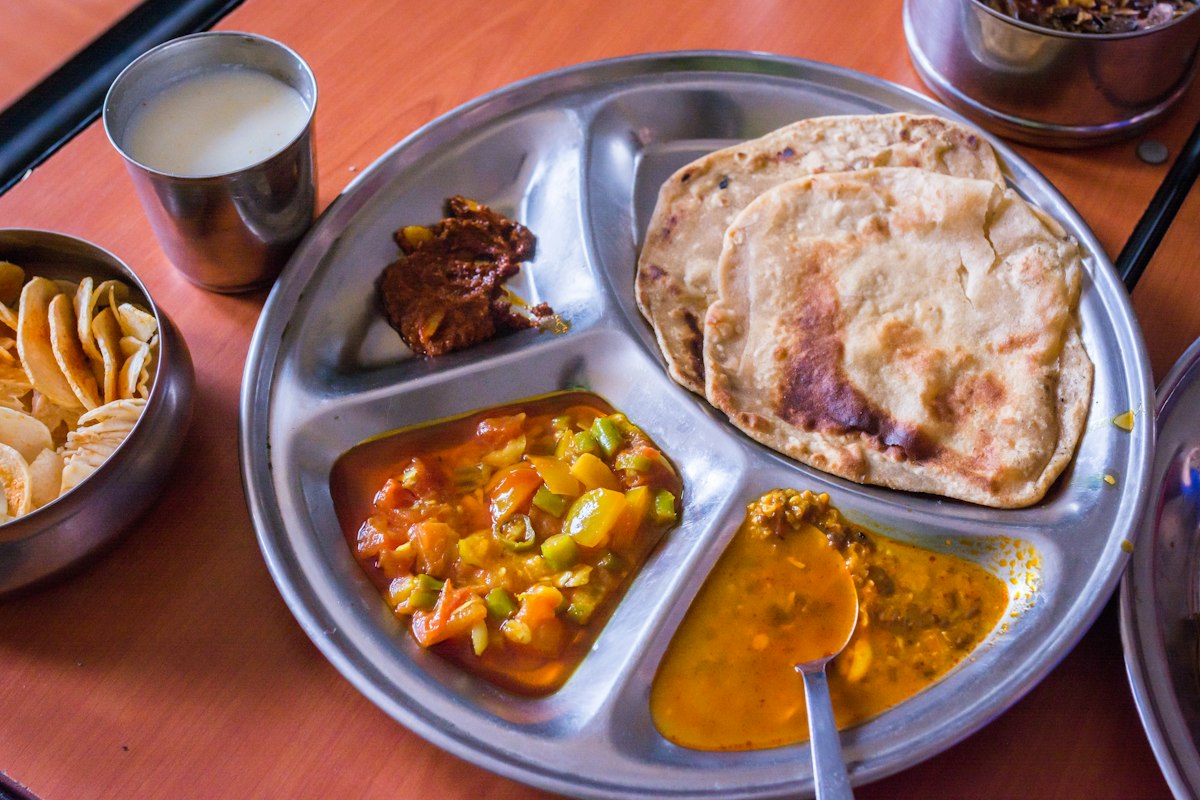
Undhiyu: Gujarat's Buried Winter Vegetable Casserole
Undhiyu is Gujarat's great winter feast dish, a slow-cooked medley of seasonal vegetables and spiced fenugreek muthia traditionally cooked upside-down in earthen pots buried underground. Here is the story, the ingredients and the technique behind its name.

Malabar Fish Curry: Kerala's Kudampuli and Coconut Coast Cooking
Malabar fish curry gets its haunting sourness from kudampuli, the smoked Malabar tamarind, layered over coconut and curry leaves. We explore the clay-pot tradition, meen pollichathu and the Moplah Muslim influence on Kerala's coast.

Appam and Stew: Kerala's Lacy Fermented Pancake Breakfast
Appam is Kerala's lacy, bowl-shaped rice-and-coconut pancake, fermented overnight for a soft spongy centre and crisp lace-thin edges. Paired with a gentle white coconut stew, it makes one of South India's most beloved breakfasts.

Maharashtrian Misal Pav: The Spicy Sprouted-Bean Breakfast of Pune
Misal pav is Maharashtra's fiery breakfast of sprouted-bean curry crowned with crunchy farsan and a slick of red kat tarri, mopped up with buttered pav. Here's how the dish is layered, and how Puneri and Kolhapuri styles differ.

Kolhapuri Tambda and Pandhra Rassa: Maharashtra's Twin Mutton Soups
In Kolhapur, mutton arrives as a pair: tambda rassa, a fiery red broth, and pandhra rassa, a soothing coconut-white one. The secret to both is the region's pungent kanda-lasun masala.

Rezala: The Pale, Fragrant Mughlai Mutton Curry of Old Calcutta
Rezala is a delicate white Mughlai mutton curry born in the kitchens of Nawabi Calcutta, built on yoghurt, cashews and the heady perfume of kewra water. Here's what makes it special and how it sits beside the city's famous biryani.

Paya: The Trotter Soup That Rewards Patience
Paya is a slow-cooked curry of lamb or goat trotters, simmered for hours into a collagen-rich, lip-sticking broth eaten at breakfast across the subcontinent. Here's how to clean and cook it, and how Lahori and Hyderabadi styles differ.

Seekh Kebab on the Skewer: Getting Char, Bind and Juiciness Right
A great seekh kebab is charred outside, juicy inside, and stays on the skewer. The secrets are fat ratio, controlling moisture from raw onion, a proper kneading for bind, and a fierce sear. Here's how restaurants do it and where home cooks go wrong.

Baingan Bharta: The Smoke-Charred Aubergine Art
Baingan bharta turns a humble aubergine into something smoky, soft and deeply savoury by charring it whole over open flame. Here is how to coax out that true tandoor-style smokiness at home, plus the Punjabi and Bengali styles worth knowing.

Malai Kofta: The Vegetarian Showstopper of North Indian Banquets
Malai kofta pairs soft paneer-and-potato dumplings with a luxuriously rich gravy, and it remains the dish that proves vegetarian cooking can steal the show. Here is how to bind koftas that hold their shape and master the white or makhani sauce that cradles them.

Asafoetida (Hing): The Fermented Resin That Powers Jain Kitchens
Asafoetida, or hing, is a pungent resin that transforms in hot oil into a savoury, almost oniony depth, which is why it sits at the heart of Jain and onion-free cooking. Here is how to bloom it correctly, why it soothes dals, and how to choose pure over compounded hing.

Mustard Oil: The Pungent Soul of Bengali and Bihari Cooking
Mustard oil gives Bengali and Bihari food its unmistakable sharp, nose-tingling kick, but it needs to be heated to smoking point before use to mellow that raw bite. Here is why you smoke it, how it powers fish and pickles, and the curious 'external use only' label found on UK bottles.